

3 min read
Well, we’ve made it. Four chapters about pesticides, and hopefully you’re still speaking to me.
Over the years, whenever I’ve challenged nutrition misinformation online, I’ve been accused of being paid by Big Food, Big Pharma and, most recently, Big Plastic. (That last one particularly made me laugh.)
I’m still waiting for the cheques.
I’m actually considering getting all three printed on the back of a T-shirt. What do you think?
But here’s something I want to make absolutely clear.
I’m not here to defend corporations. I’m here to defend the evidence.
And unlike some of the people frightening you about food online, I’m not here to tell you what you should or shouldn’t eat.
I’m here to give you the scientific context to make those decisions for yourself.
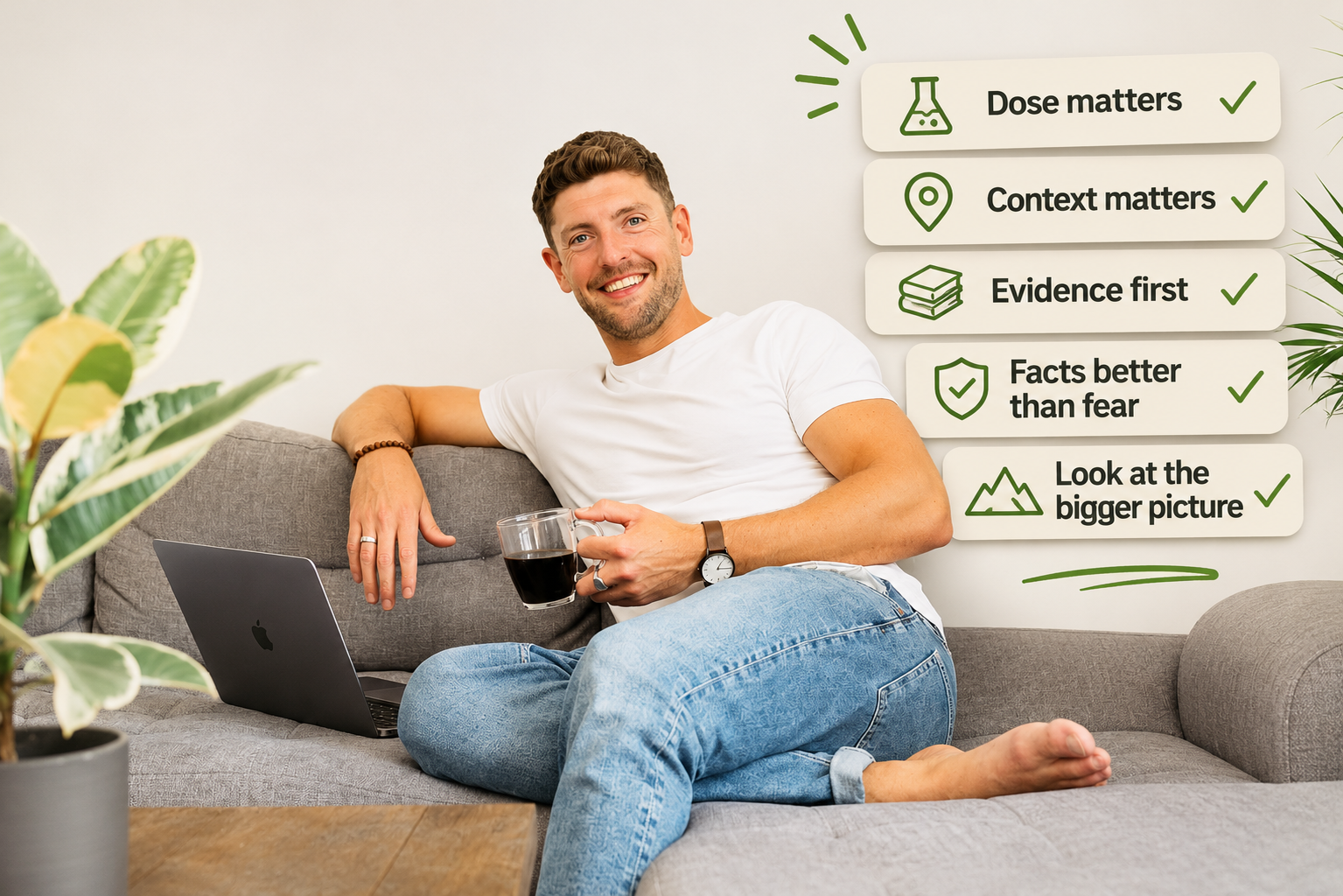
So, after everything we’ve explored, here are five things I really hope you’ll remember.
Five things I really want you to remember
1. Everything is made of chemicals.
Just because something sounds frightening, has a name you can’t pronounce or is described as a chemical doesn’t make it dangerous. Everything you eat is made of chemicals. (Remember our blueberry example!)
2. Detecting something doesn’t mean it’s harming you.
Finding a pesticide residue on strawberries isn’t the same as being exposed to an amount capable of causing harm. The presence of a potentially harmful substance and the actual risk it poses are two very different things.
3. The dose matters. Even with water.
Drink excessive amounts of water in a short period and it can become dangerous. That doesn’t make water inherently bad. The amount, frequency and duration of exposure matter, alongside the substance itself.
4. If social media makes you frightened of food, remember this.
At best, you’re probably being shown information stripped of crucial scientific context. At worst, it’s factually wrong. Fear sells. It generates clicks, followers and money. So the next time someone tells you a perfectly ordinary food is poisoning you, question the evidence before questioning your breakfast. (Unless it’s nuclear cereal.)
5. Your relationship with food shapes how you eat.
Food fear, guilt and rigid rules can affect your mental wellbeing and eating behaviours. Research generally associates more flexible approaches to eating with better psychological outcomes. Learning to eat nutritiously without fearing individual foods can help you build healthier, more sustainable habits whilst still enjoying the foods you love.
And one final thing, from me to you.
At the beginning of this series, I told you about the years I spent trapped in my own food fears.
And here’s the irony I wish my younger self had understood.
The less I’ve feared food, the easier I’ve actually found it to eat healthily.
Most days, I comfortably eat at least 30 g of fibre, get plenty of protein and enjoy a varied diet.
However, I can also go out for dinner, enjoy an ice cream afterwards and not feel the slightest need to restrict my food the following day.
No guilt. No punishment. No starting again on Monday.
Just food. And a life that doesn’t revolve around it.
I know how liberating that feels, and it’s something I genuinely want other people to experience.
You don’t need to fear your food to care about your health.
One last favour (I promise).
I’ve now spent what must be upwards of 15 hours researching and writing this series.
Twelve hours. About pesticides.
I really do know how to have a good time.
And the best bit? I haven’t even asked for your email address. Not a single downloadable PDF in exchange for your personal details. Revolutionary stuff.
So, if you’ve found this series helpful, I’d genuinely appreciate you sharing it with someone who might benefit.
Share it, tag me on Instagram (@samjonesnutrition), and please let me know your thoughts. Even if you disagree with something, I’m always happy to have a constructive conversation.
Because if all this helps even a handful of people feel less frightened of food, those 15 hours will have been worth every minute.
On your side, Sam.
